Purchase Price vs. Mortgage Rate: Compare the Whole Purchase
The price sets your starting investment. The financing determines what it costs to carry. Evaluate both without depending on a future refinance.

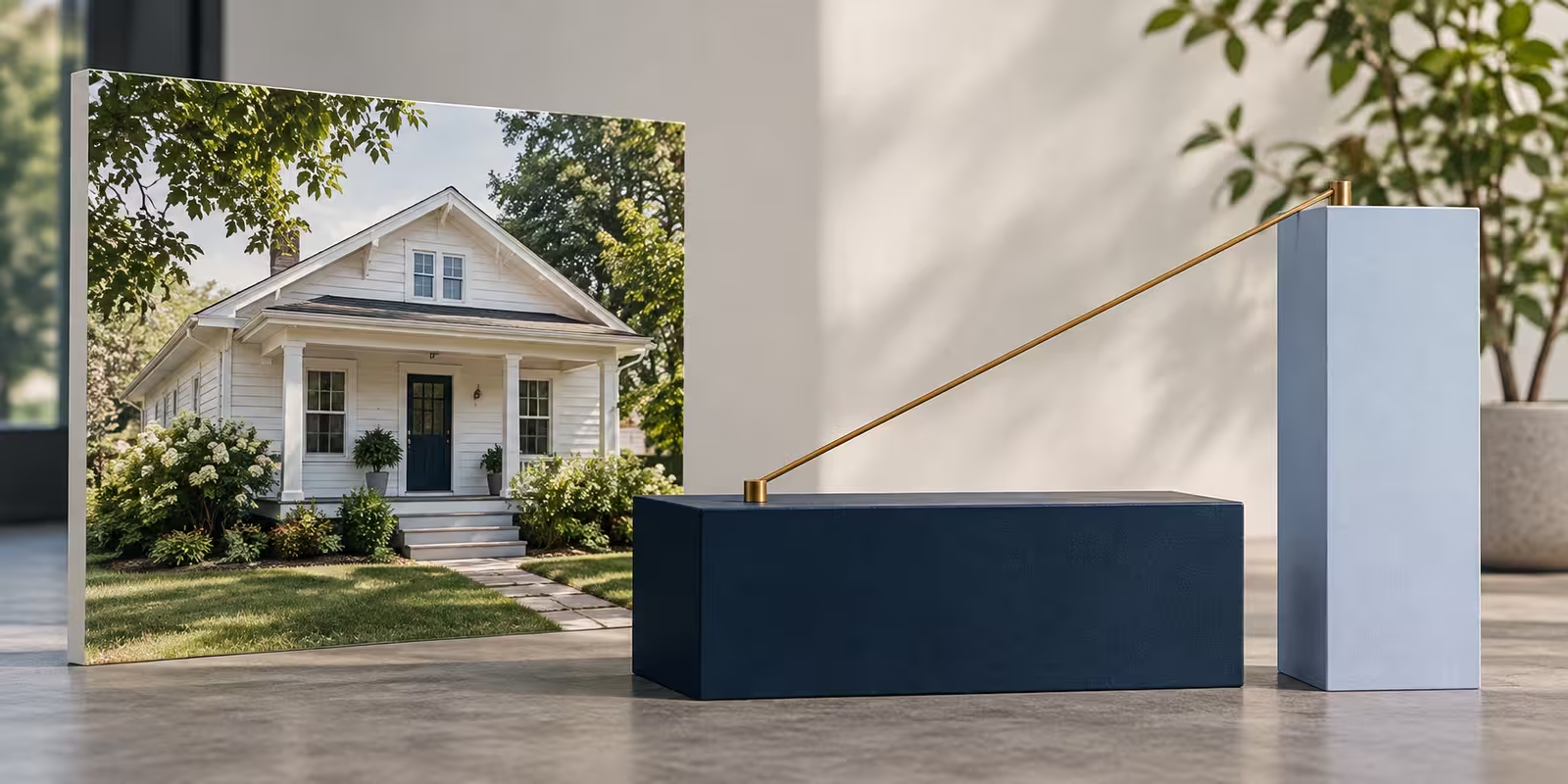
Quick Facts: Two Parts of One Decision
-
Entry price
Sets your starting investment.
-
Loan terms
Shape the cost of financing.
-
Cash reserves
Keep room beyond the purchase.
-
Holding period
Compare costs over your own horizon.
Price and financing have different jobs
The price sets the starting investment. Loan terms shape the cost of financing it. Evaluate both at terms you can support today.

The acquisition price
A lower price can reduce the down payment and starting debt. Condition and comparable closed sales still determine value.

The cost of carrying it
A fixed note rate does not change with the market. Replacing the loan requires new qualification, pricing and costs.
A lower price can still mean a higher payment
Two hypothetical purchases, each with 20% down and a 30-year fixed loan. These rates are illustration inputs, not current offers.
Hypothetical scenario A
Higher price, lower rate
$500,000
- Down payment · 20%
- $100,000
- Initial loan
- $400,000
- Assumed fixed rate
- 4.0%
- Loan term
- 30 years
Monthly principal & interest $1,910
Hypothetical scenario B
Lower price, higher rate
$420,000
- Down payment · 20%
- $84,000
- Initial loan
- $336,000
- Assumed fixed rate
- 7.0%
- Loan term
- 30 years
Monthly principal & interest $2,235
P&I only. Taxes, insurance, mortgage insurance, maintenance, HOA dues and closing costs are excluded. No particular market discount is implied.