Rates & Refinancing

How the Fed Influences Your Mortgage Rate

The Fed influences borrowing costs. It does not set your mortgage rate. Here is what actually connects the two.

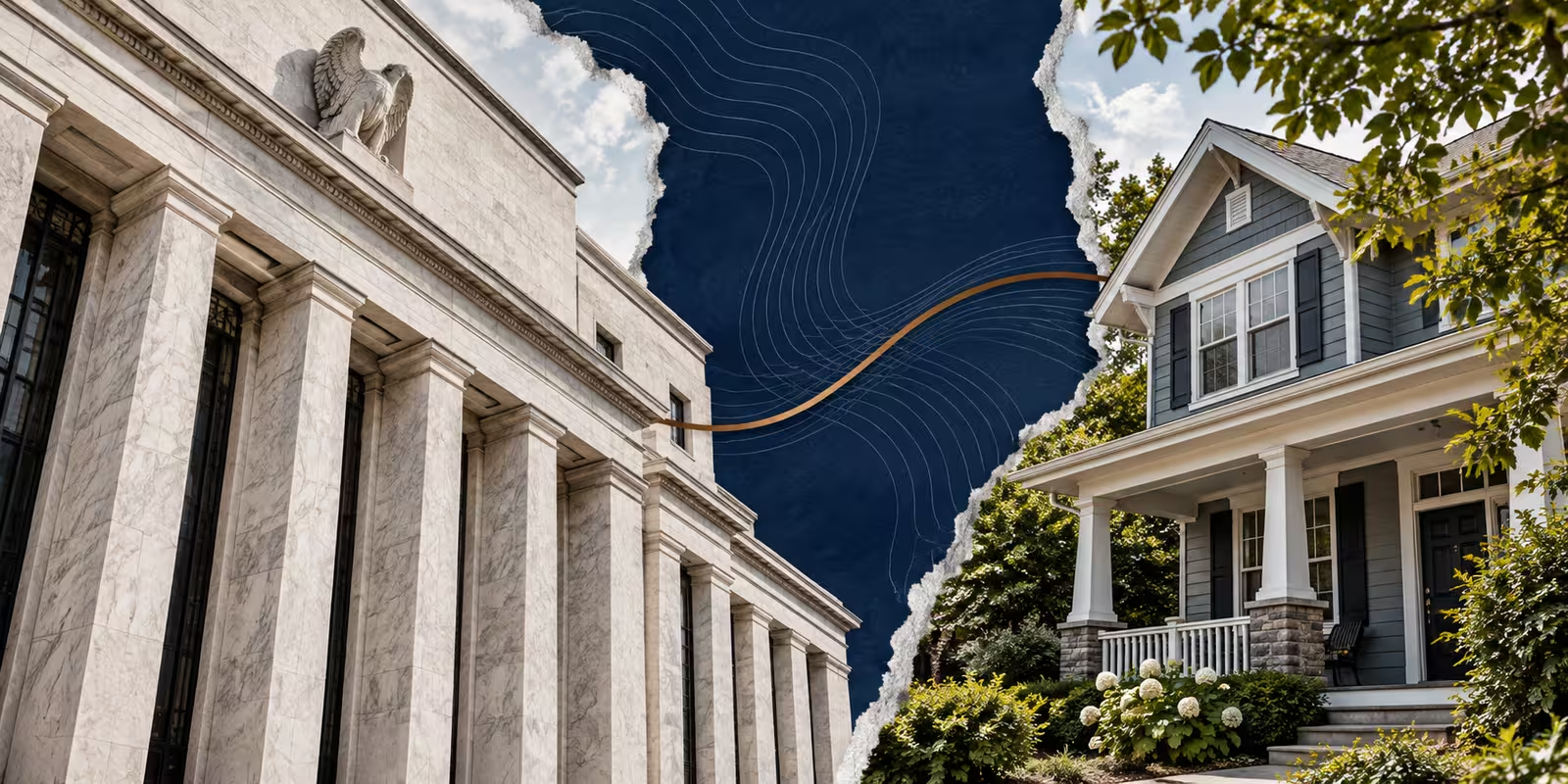
Collage of a marble government building and a suburban house, joined by a copper line across a navy wave pattern

Quick Facts: The Fed and Your Mortgage Rate

  • Short-term policy

    The Fed sets an overnight policy target.

  • Bond markets

    Longer-term pricing reflects a broader outlook.

  • Expectations

    Markets can move before an announcement.

  • Your own quote

    Loan terms and your profile still matter.

The connection is indirect

The Fed sets a target range for the federal funds rate, an overnight borrowing rate. It does not set the rate on a 30-year fixed mortgage. Mortgage pricing reflects a much longer outlook—and several linked markets.

For an existing fixed-rate loan, a Fed decision does not change the contractual interest rate. Taxes and insurance can still change your total payment.

Three forces behind a mortgage quote

The policy signal

Short-term policy

Fed decisions and communications influence financial conditions and investor expectations.

  • A silver pen and a brass paper clip on an engraved bond certificate

    Treasury yields

    The 10-year Treasury is a useful reference. Mortgage rates do not equal that yield plus a fixed markup.

  • A paper grocery bag with bread, milk and fruit on a kitchen counter

    Inflation expectations

    Investors consider the purchasing power of future payments and the outlook for growth.

  • A row of houses with front porches on a tree-lined street

    Mortgage-backed securities

    Investor demand, prepayment risk and loan-related costs also help shape mortgage pricing.

Markets can move before the meeting

Aerial view of a suburban neighborhood with a curving street

Bond investors price in expectations before the announcement. The surprise can be the Fed’s outlook, rather than the decision itself.

A widely expected cut can coincide with higher long-term yields if the message changes expectations. Mortgage quotes may rise, fall or remain broadly unchanged.

Different loans respond differently

Read your own loan’s terms. There is no universal adjustment timetable after a Fed meeting.

How fixed-rate mortgages, adjustable-rate mortgages and HELOCs respond to rate changes
Loan type What affects the rate What to check
Fixed-rate mortgage Bond markets and lender pricing for new offers. Existing fixed interest rate stays the same; taxes and insurance may change.
Adjustable-rate mortgage Contract index plus margin, subject to caps and scheduled resets. Initial fixed period, next reset date, caps and floors.
Variable-rate HELOC The agreement’s index, often prime, plus a margin. Adjustment terms, rate limits and the repayment period.

Four questions before your next quote

  • Are the offers comparable?

    Review the same loan amount and product, fees, credits and cash to close.

  • What is the complete payment?

    Compare interest rate and APR, plus insurance, taxes and mortgage insurance.

  • What does the rate lock cover?

    Confirm expiry, extension costs and changes that may affect pricing.

  • Does today’s payment fit?

    Budget at current terms. Treat refinancing as a possibility, not a requirement.

Sources & further reading

  1. Federal Reserve: How monetary policy works (opens in a new tab)
  2. Fannie Mae: Components of a mortgage rate (opens in a new tab)
  3. CFPB: Fixed and adjustable rates (opens in a new tab)
  4. CFPB: Comparing Loan Estimates (opens in a new tab)

Was this article helpful?

The Bottom Line

The Fed matters, but its announcement is only one part of mortgage pricing. Read the headline, understand your loan type, and bring the decision back to a complete offer and a payment your budget can support.

Let’s Connect

Talk with a licensed loan officer.

This article is for general educational purposes only and isn’t a commitment to lend or an offer of credit. Loan programs, rates, fees, and eligibility vary by lender and borrower and may change without notice. Talk with a licensed loan officer about your situation.